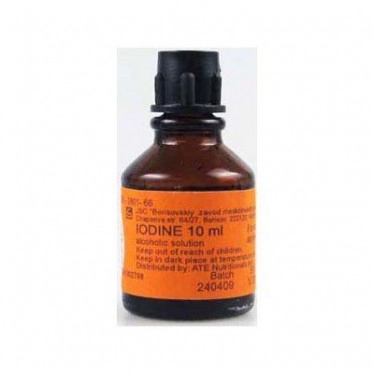
Iodine Solution 5% 10ml
$5.99
The solution has antiseptic properties and works as an stimulant and anti-attracking agent. The iodine takes part in synthesis of thyroid gland hormones and influences the thyroid gland’s performance. The iodine intensifies the dissimilation and has effect on lipid and albumin. Use in cases of inflammatory skin and mucous membrane diseases, other skin diseases, pains and aches in muscles and nerves, and sclerosis. Recommended dosage: Use the solution externally to treat wounds or for washing the surgical field and painful areas on skin and/or mucous membrane. For sclerosis take internally 1 to 12 drops with milk 1 or 2 times daily after meals for 30 days once or twice a year.
Product Overview
Iodine Solution: A Versatile Antiseptic and Disinfectant
Iodine solution, often referred to as iodine tincture or iodine antiseptic, is a well-known and versatile solution used for its antiseptic and disinfectant properties. With a long history of use in medical and household settings, iodine solution remains an important tool for preventing infection and promoting wound healing.
Understanding Iodine’s Antiseptic Properties
Iodine is a chemical element that has potent antiseptic qualities due to its ability to destroy or inhibit the growth of various microorganisms, including bacteria, viruses, and fungi. Iodine solution is typically used to cleanse and disinfect the skin and mucous membranes, making it an essential component of first aid kits and medical settings.
Applications of Iodine Solution
Iodine solution has a wide range of applications:
- Wound Disinfection: It is commonly used to clean and disinfect minor cuts, scrapes, and wounds to prevent infection.
- Surgical Preparation: Medical professionals use iodine solution to prepare the skin before surgical procedures to reduce the risk of surgical site infections.
- Emergency First Aid: Iodine solution can be applied to wounds in emergency situations when access to clean water and soap is limited.
- Topical Antiseptic: It’s used for treating skin infections, burns, and other dermatological issues.
Types of Iodine Solution
There are different concentrations and formulations of iodine solution available:
- Povidone-Iodine Solution: Also known as Betadine, this formulation contains iodine complexed with povidone, enhancing its stability and effectiveness.
- Tincture of Iodine: This is a traditional formulation that combines iodine with alcohol, making it suitable for external use on the skin.
Usage and Precautions
When using iodine solution, consider the following:
- Apply to Clean Skin: Before applying iodine solution, ensure that the area is clean to maximize its effectiveness.
- Follow Directions: Follow the instructions on the product label for proper usage and dilution.
- Allergies: Some individuals may be sensitive or allergic to iodine. Perform a patch test if you’re unsure.
Conclusion
Iodine solution remains a reliable and effective antiseptic and disinfectant with a wide range of applications. From wound care to surgical preparation, iodine solution plays a crucial role in preventing infections and promoting healing. As with any medical product, it’s important to use iodine solution as directed and seek professional advice when necessary.
Note: This article is for informational purposes only and should not be considered medical advice.
Ingredients
- Iodine — 2.2 g per 100 ml
- Potassium iodide — 2 g per 100 ml
- Purified water — to 100 ml
- Ethanol — to 100 ml
How To Take
Apply iodine solution 5% externally to the affected area of skin or mucous membrane using a cotton swab or gauze pad. Use as a compress or topical application 1–2 times per day as needed. Avoid contact with eyes and do not apply to large areas of broken skin. For wound disinfection, apply a thin layer around — not directly inside — open wounds.
Shipping + Returns
Shipping
We currently ship within the United States. Most orders are processed within 1–2 business days and delivered in 3–7 business days with standard shipping. Shipping costs are calculated at checkout, and tracking information is provided once your order ships.
Returns
Unused, unopened items may be returned within 7 days of delivery in their original packaging with proof of purchase. Opened supplements, medications, and certain personal care items are non-returnable. If you receive a damaged or incorrect item, please contact us within 48 hours of delivery. Refunds are processed after the returned item has been inspected.
For questions, please contact us at support@vitaminka.com