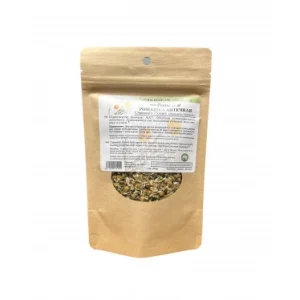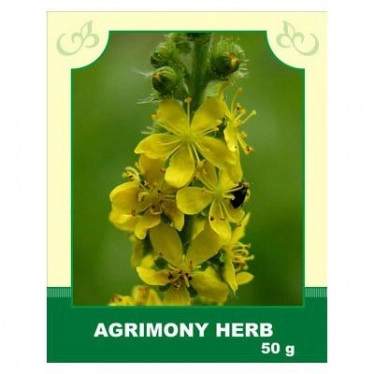
Agrimony Herb 50g
$7.99
Internally, it is taken for gastrointestinal diseases, hemorrhoids, gallbladder issues, bleeding, rheumatism, herpes, inflammation of the laryngeal mucosa, as well as for furunculosis, poorly healing wounds, migraines, nocturnal enuresis, atony of the bladder, and urolithiasis. Infusion with honey is one of the best remedies for liver and spleen diseases. Method of application and dosage: Steep 2 tablespoons of raw material in 400 ml boiling water, infuse for 2 hours, strain, and take 1/2 cup 4 times a day before meals. Externally, the infusion is used for rinsing the oral cavity in various inflammatory processes (tonsillitis, laryngitis, pharyngitis), for nasal congestion, and for washing wounds and ulcers, as well as for abrasions and bruises. Steep 5 tablespoons of raw material in 400 ml boiling water, infuse for 15-20 minutes, strain, squeezing the remaining raw material. Contraindications: Individual intolerance. Use with caution for children and elderly people.
Product Overview
Agrimony (Agrimonia eupatoria) in Medicine
Agrimony (Agrimonia eupatoria) is a perennial herb that has been used in traditional medicine for centuries. It is native to Europe, but can also be found in North America and Asia. Agrimony is a member of the rose family and is known for its yellow flowers and unique appearance.
In traditional medicine, agrimony has been used to treat a variety of ailments. It is known for its astringent, diuretic, and anti-inflammatory properties. Agrimony has been used to treat conditions such as diarrhea, sore throat, and skin irritations. It has also been used as a remedy for coughs and respiratory conditions.
One of the key components of agrimony is tannin, which gives the herb its astringent properties. This makes agrimony useful in treating diarrhea and other gastrointestinal issues. Agrimony has also been used to help reduce inflammation and soothe sore throats.
Other potential medicinal uses for agrimony include its ability to support the digestive system and help with liver function. It has also been used as a remedy for mild anxiety and as a tonic for overall well-being.
While agrimony is generally safe for most people, it is important to consult with a healthcare professional before using it, especially if you are pregnant, nursing, or taking any medications. Agrimony can interact with certain medications and may not be suitable for everyone.
Agrimony is available in various forms, including teas, tinctures, and capsules. It can also be used topically in creams or ointments to soothe skin irritations. When using agrimony, it is important to follow dosing instructions and to use it as directed.
Note: This article is for informational purposes only and should not be considered medical advice.
Ingredients
- Agrimony herb (Agrimonia eupatoria) — 100% dried aerial parts
- Active constituents: tannins
- Flavonoids (luteolin, apigenin)
- Bitter glycosides
- Essential oils
- Vitamins C and K
- Minerals (iron, manganese)
How To Take
Pour 2 tablespoons of the herb into 400 ml of boiling water and steep for 30 minutes; strain before use. Take 100 ml (approximately half a glass) 3–4 times daily before meals. For liver and spleen conditions, the decoction may be prepared with honey. External use: apply the warm decoction as a compress or rinse to poorly healing wounds and skin conditions.
Shipping + Returns
Shipping
We currently ship within the United States. Most orders are processed within 1–2 business days and delivered in 3–7 business days with standard shipping. Shipping costs are calculated at checkout, and tracking information is provided once your order ships.
Returns
Unused, unopened items may be returned within 7 days of delivery in their original packaging with proof of purchase. Opened supplements, medications, and certain personal care items are non-returnable. If you receive a damaged or incorrect item, please contact us within 48 hours of delivery. Refunds are processed after the returned item has been inspected.
For questions, please contact us at support@vitaminka.com