Badiaga (powder )
$7.99
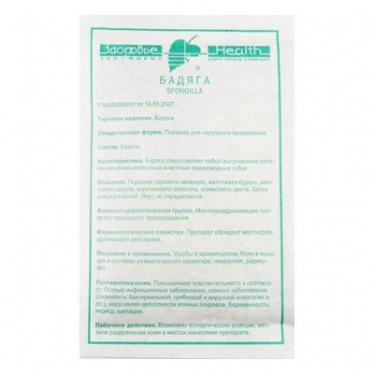
Externally, the powder of marl has resorptive and whitening effects. For adolescent acne, marl powder is mixed to the consistency of sour cream with 3% hydrogen peroxide or a 5% solution of boric acid. It is heated in a water bath and rubbed into the facial skin, wearing rubber gloves. After 30 minutes, the mask is washed off. In places of bruises, pigmentation on the face, bruises, and hematomas, a mixture of 1 part marl powder and 30 parts vegetable oil, preferably olive oil, is rubbed. This is also a good distracting remedy for muscle pain. For oily seborrhea, slowly add 3% hydrogen peroxide or a solution of boric acid (0.5 teaspoon per 0.5 cup of water) to 1 teaspoon of marl powder, stirring. The mixture, with the consistency of sour cream, is heated in a water bath and warm rubbed into the hair roots once every 5 days. Contraindications: Individual intolerance. Do not apply around the eyes, do not use on dry and thin facial skin, in the presence of superficial vessels, and with increased hair growth on the face.
Product Overview
Spongilla (Spongilla) in Medicine: A Natural Treatment for Wound Healing
Spongilla, also known as Spongilla lacustris, is a freshwater sponge that has been used in traditional medicine for centuries. It is rich in bioactive compounds that have shown promising results in treating various medical conditions, including wound healing.
One of the key properties of spongilla is its ability to promote tissue regeneration. Studies have shown that the bioactive compounds found in spongilla can stimulate the production of new skin cells, making it an effective treatment for wounds, cuts, and abrasions. It also has anti-inflammatory and antimicrobial properties, which help prevent infection and reduce swelling at the site of the wound.
Furthermore, spongilla has been found to enhance the formation of collagen, a protein that is essential for skin strength and elasticity. This makes it particularly beneficial for treating chronic wounds, such as diabetic ulcers and pressure sores.
In addition to its wound healing properties, spongilla has also been used to alleviate pain and inflammation associated with arthritis and other musculoskeletal conditions. Its natural analgesic properties make it a popular alternative to conventional pain relievers for those seeking natural remedies.
It is important to note that spongilla should be used under the guidance of a healthcare professional, as it may interact with certain medications and cause allergic reactions in some individuals. Furthermore, the quality and purity of spongilla products can vary, so it is crucial to source them from reputable suppliers.
In conclusion, spongilla shows great potential as a natural treatment for wound healing and pain relief. Its bioactive compounds have been scientifically proven to promote tissue regeneration, reduce inflammation, and alleviate pain. However, more research is needed to fully understand its mechanisms of action and determine the optimal dosage for different medical conditions.
Note: This article is for informational purposes only and should not be considered medical advice.
Ingredients
- Freshwater sponge (Spongilla lacustris) — dried powder (active substance)
- Natural silica spicules
- Proteins and amino acids
- Iodine and trace minerals
- Vitamins (naturally occurring)
How To Take
For external use only. Mix the powder with 3% hydrogen peroxide or 5% boric acid solution to the consistency of sour cream, warm slightly in a water bath, and apply to the affected skin area wearing protective gloves. Leave on for up to 30 minutes, then rinse thoroughly with water. Use no more than once or twice per week, or as directed by a specialist.
Shipping + Returns
Shipping
We currently ship within the United States. Most orders are processed within 1–2 business days and delivered in 3–7 business days with standard shipping. Shipping costs are calculated at checkout, and tracking information is provided once your order ships.
Returns
Unused, unopened items may be returned within 7 days of delivery in their original packaging with proof of purchase. Opened supplements, medications, and certain personal care items are non-returnable. If you receive a damaged or incorrect item, please contact us within 48 hours of delivery. Refunds are processed after the returned item has been inspected.
For questions, please contact us at support@vitaminka.com