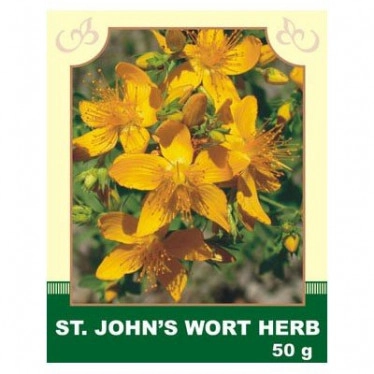
St. John’s Wort Herb 50g
$7.99
Description. Herb and flowers contain different flavonoids (rutin, hyperoside, isoquercetin, quercitrin, quercetin, amentoflavone, astilbin, miquelianin), phenolic acids, phloroglucinols and essential oils. St. John’s Wort has recently become one of the heavyweight herbs in medicine, mostly due to it’s reputed anti-depressant effects. St John’s wort is most widely known as a herb for major depression. In some countries, such as Germany, it is commonly prescribed for mild depression, especially in children, adolescents, and where cost is a concern. Lesser known medicinal attributes of this plant include usefulness as an antiseptic, pain killer, and anti-viral agent. Water infusion of St. John’s Wort Herb is good for heart disorders, irritability and insomnia, for improoving bile composition and liver disorders (powerful diuretic)and for women’s urogenital inflammations. St.John’s Wort due to its high bio-active effect is an excellent support for men’s health! Uses. St. John’s wort has also shown results in the following conditions, a few of which are related to depression. They are alcoholism, bacterial infections, premenstrual syndrome, seasonal affective disorders, viral encephalitis, wounds, minor burns, hemorrhoids. Moreover, internally, St. John’s Wort is believed to be of benefit for symptoms of anxiety, cough, digestion, bronchial problems, diarrhea, fatigue, flu, gout, insomnia, irritability, and ulcers. Externally, St. John’s Wort can be applied for bruises, wounds, burns, hemorrhoids, sunburn, herpes sores, varicose veins, sciatica, and nerve pain. Avoid taking the herb if you are hypertonic. Water infusion is used as a mouthwash for weak gums, parodontosis and other oral inflammations. Attention! Before using any herbal products, make sure that you have full knowledge of how the herb works and any adverse reaction it may cause.
Product Overview
St. John’s Wort Herb in Medicine
St. John’s Wort, also known as Hypericum perforatum, is a flowering plant that has been used for centuries as a natural remedy for various health conditions. Its medicinal properties have made it a popular herb in the field of alternative medicine.
St. John’s Wort is often used to treat depression, anxiety, and sleep disorders. It is believed to have a mood-lifting effect by increasing the levels of serotonin, dopamine, and noradrenaline in the brain. Some studies have shown that it can be as effective as prescription medications in treating mild to moderate depression.
In addition to its mental health benefits, St. John’s Wort has also been used to alleviate symptoms of menopausal mood swings, premenstrual syndrome (PMS), and seasonal affective disorder (SAD). It is also known for its anti-inflammatory and antibacterial properties, making it useful in treating wounds, burns, and skin conditions such as eczema and psoriasis.
St. John’s Wort can be taken in various forms, including capsules, extracts, and teas. However, it is important to consult with a healthcare professional before using this herb, as it can interact with certain medications and cause side effects.
It is worth noting that the use of St. John’s Wort may not be suitable for everyone, especially for pregnant or breastfeeding women, children, and individuals with certain medical conditions. Therefore, it is crucial to seek professional advice before incorporating this herb into your healthcare regimen.
As with any herbal remedy, it is essential to use St. John’s Wort under the guidance of a qualified healthcare provider. When used appropriately, this herb can offer natural relief for several health issues. However, it is crucial to prioritize safety and ensure that it does not interfere with any ongoing medical treatments or conditions.
Note: This article is for informational purposes only and should not be considered medical advice.
Ingredients
- Hyperoside (hyperin) — flavone glycoside with antioxidant properties
- Quercetin and Rutin — flavonoids with anti-inflammatory effects
- Carotenoids (Beta-carotene) — precursors of vitamin A
- Ascorbic acid (Vitamin C) — antioxidant and immune support
- Nicotinic acid (Vitamin B3) — supports metabolism
- Tannins — astringent and antimicrobial properties
- Saponins — support anti-inflammatory activity
How To Take
To prepare an infusion, pour 1–2 tablespoons of dried St. John's Wort herb into 200 ml of boiling water and steep for 15–20 minutes. Strain and take orally 1/3 cup (approximately 70 ml) two to three times daily before meals. For external use, the infusion or oil extract can be applied to the affected skin area. Consult a physician before use, especially if taking other medications, as St. John's Wort may interact with various drugs.
Shipping + Returns
Shipping
We currently ship within the United States. Most orders are processed within 1–2 business days and delivered in 3–7 business days with standard shipping. Shipping costs are calculated at checkout, and tracking information is provided once your order ships.
Returns
Unused, unopened items may be returned within 7 days of delivery in their original packaging with proof of purchase. Opened supplements, medications, and certain personal care items are non-returnable. If you receive a damaged or incorrect item, please contact us within 48 hours of delivery. Refunds are processed after the returned item has been inspected.
For questions, please contact us at support@vitaminka.com